
Housing Justice in Nebraska
We believe that equal access to housing is a basic human and civil right, but the persistence of systemic barriers continues to push safe and stable housing out of reach for many Nebraskans. Housing justice means protecting those who experience systemic racism, gender-based violence, and discriminatory treatment or impact as barriers to have a safe and stable place to call home. The ACLU of Nebraska is committed to ending barriers to fair housing and ensuring fair housing opportunities for all Nebraskans, but particularly women, especially low-income women of color who are disproportionately harmed by housing inequity.
Evictions: A racial justice, economic justice, gender justice, reproductive justice, and disability rights issue.
Not only are people with low-incomes more likely to be evicted, but evictions also serve to prevent economic opportunities. Experiencing eviction not only forces immediate displacement, but it also makes it significantly more difficult to find housing in the future and leads to job loss and a slew of economic consequences, not to mention impacting other basic rights of tenants and their children, such as education as well as physical and mental health.
Nationally
- Black women face eviction filings at nearly twice the rate of white women.
- Nearly 1 in 5 Black and Latine children experience eviction by age 15.
In addition to being an issue of economic justice, evictions are an issue of gender and reproductive justice. Reproductive justice, the human right to maintain personal bodily autonomy, is greatly compromised when one’s housing and economic situation is unstable, unsafe, or fair housing is simply out of reach.
Women, particularly Black and Latina women, are disproportionately affected by evictions. In fact, Black women face eviction filings at nearly twice the rate of white women. Across the country, Black women renters had evictions filed against them at nearly double the rate of white renters or higher in 17 of 36 states including in Nebraska.
Black women experience evictions at alarmingly high rates.
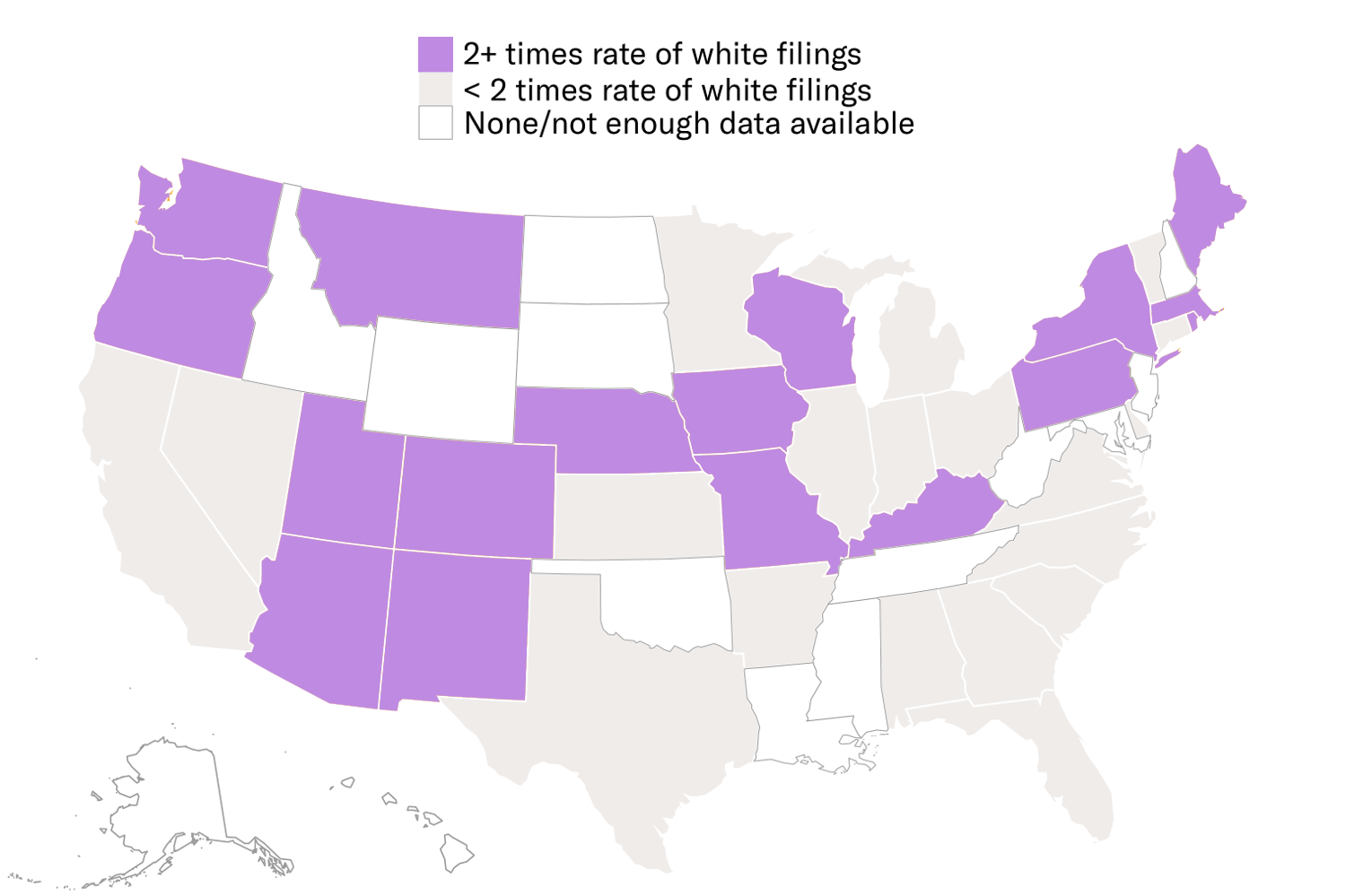
Black female renters were filed against for eviction at double the rate of white renters in 17 of 36 states documenting this information.
ACLU, Clearing the Record: How Eviction Sealing Laws Can Advance Housing Access for Women of Color
Domestic Violence and Housing Justice Policies in Nebraska
It is critical that lawmakers and leaders understand that traumatic events such as evictions can negatively influence a person's life outcomes in both the short and long term. In contrast, laws and policies that help reduce systemic barriers to a stable home can improve the social, physical and mental health of Nebraskans. Residential instability, including evictions, often exacerbates domestic violence issues and domestic violence often leads to residential instability. The laws that we make can either support survivors of domestic violence or punish them.
Locally
- 48% of people evicted had previously been in debt or collections court.
- 32% of people evicted were previous survivors of domestic violence.
Currently, Nebraska has some housing protections and supports, including Neb. Rev. Stat. § 76-1431(5) and §76-1431.01 (which provide protections under Nebraska's Uniform Residential Landlord and Tenant Act for survivors of domestic violence) and more recent legislation like LB 78 (2025, introduced by Sen. Bostar and prioritized by the State-Tribal Relations Committee) that created the Domestic Violence and Sex Trafficking Survivor Assistance Act that expands housing supports and facilitates housing stability for domestic violence survivors.
These are opportunities to take a step forward on racial justice and gender equity. Although people of all races, genders, and sexual orientations can experience domestic violence, it has a disproportionate effect on communities of color and we know that women and girls experience domestic violence and sexual assault at alarmingly high rates. Additionally, LGBTQ+ people experience domestic violence at similar rates as the general population, but face added barriers to accessing support.
A Step Towards Housing Justice
Since the start of the COVID-19 pandemic, rent prices across the country continue to surge. Amid a nationwide housing crisis, we are also facing a historic eviction crisis. While the cards might be stacked against Nebraska tenants who are struggling to keep pace with the rising cost of living, there is hope on the horizon. Towards the end of 2022, alongside our partners at the Iowa-Nebraska NAACP, we submitted a joint amicus curiae or "friend of the court" brief to the Nebraska Supreme Court in NP Dodge vs. Holcomb to advocate for the right to jury trial in eviction cases and continue to support the Tenant Assistance Project, as well as advocate for housing justice policies at the state and local level.
The brief sides with the appellant in the case, arguing that the Nebraska Constitution provides for the right to a jury trial in eviction proceedings. It also outlines policy reasons why jury trials in eviction actions are important given the current eviction crisis, the collateral consequences of evictions and the disproportionate effects of evictions on Nebraskans of color, those with disabilities and women with minor children.
We know that housing is so much more than just the walls that make up our house or apartment. Housing is about security, safety and economic opportunity. We will continue to fight for the rights of all Nebraskans who are in search of secure and safe housing in the courts and in the legislature because equal access to safe housing is a civil right.
Know Your Resources
In Nebraska, there are laws, policies, and organizations that can help tenants who are facing eviction and have experienced domestic violence. Attorneys representing these clients in Lancaster County are encouraged to review this resource.