Lawsuit Challenges Prison Ban on Indigenous Faith Practices
April 13, 2026 12:00 am
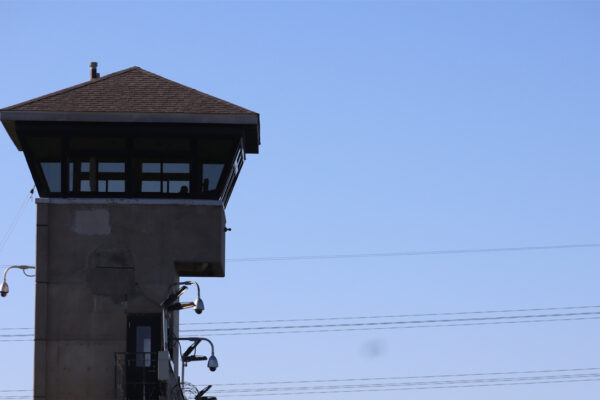
LINCOLN, Neb. – Two men are suing state prison officials in the hope of lifting a recent ban on certain Indigenous faith practices at the Nebraska State Penitentiary.
Attorneys with Big Fire Law & Policy Group and the American Civil Liberties Union (ACLU) of Nebraska filed a federal civil rights lawsuit today on behalf of Joshua Lewis and Tremayne Scott. Lewis is Cherokee and of Tarasca descent. Scott is a member of the Rosebud Sioux Tribe. The men and dozens of other incarcerated Native American Nebraskans received notice in late February that state prison officials had issued a 60-day ban on access to a religious space within the prison yard. This religious space is the only place within the facility where prison officials allow certain Native American religious practices to occur. The ban prevents practices that are central to their faith, including smudging, smoking red willow bark and participating in sweat ceremonies.
Lewis and Scott believe the ban is meant as punishment for contraband found with religious supplies. Neither has been accused of placing that contraband. The men have filed multiple grievances through the prison system’s administrative process, including an emergency grievance, but the restrictions remain in place.
The men’s lawsuit argues that state officials are violating their rights under the U.S. Constitution as well as federal and state laws by denying their freedom to practice their sincerely held religious beliefs. It points to the federal Religious Land Use and Institutionalized Persons Act, which outlaws any “substantial burden on the religious exercise of a person residing in or confined to an institution" unless it is the least restrictive option for furthering a “compelling governmental interest.” It also argues the state is in violation of Nebraska’s First Freedom Act, which outlaws any substantial burden on religious exercise unless it is “essential to further a compelling governmental interest.” The Nebraska Legislature approved the First Freedom Act in 2024 via a bill that also expanded protections for the wearing of tribal regalia.
“Plaintiffs require the intervention of this Court to protect their right to practice their faith and to prevent its future unlawful restriction,” the lawsuit reads in part.
Today’s filing seeks immediate court action to prohibit the prison system from restricting the men’s religious exercise while litigation plays out, a permanent order at the end of litigation cementing that protection, and a judgment that the state prison system cannot lawfully restrict participation in traditional Indigenous faith practices in this way.
Speaking with his attorneys, Lewis said that his traditions are deeply important to him and that his spirit has suffered from not being allowed to follow his beliefs in an already difficult environment.
Scott said:
“This is so important to me on many levels. Our spiritual traditions are part of my identity and a core part of my life. They give me direction and stability. They encourage me to turn from my old ways and walk in a good way. The ways of our ancestral medicine people create bridges between worlds, the spiritual and the physical. Being denied the ability to take part in those traditions is painful. I pray that this will be resolved soon in a way that makes sure we are never again prevented from practicing our faith and keeping our ways alive.”
Danelle Smith, partner at Big Fire Law & Policy Group, said:
“For Indigenous people, spiritual practices like smudging and sweat lodge ceremonies are sacred and essential to maintaining balance, healing and connection to culture. Denying access to these practices causes real harm — especially in a prison setting where spiritual grounding can be critical. Indigenous peoples are uniquely familiar with government restrictions on traditional religious practices. But the law recognizes the importance of protecting religious exercise, including in prison, and we are committed to ensuring that Indigenous individuals are able to practice their faith with dignity and respect.”
Carter Matt, staff attorney with the ACLU of Nebraska, said:
“Our state and federal laws make it clear that restrictions on religious liberty need to clear a high bar, and this arbitrary restriction does not meet that bar. The bottom line is that it is not the state’s role to restrict religious exercise or to pick and choose which traditional practices are appropriate for our Native American clients. It is hard to imagine incarcerated Christians being told that hymns and Bible study are off-limits because contraband was found in the chapel, but that is essentially what is happening here. We are hoping for a swift order from the court so that our clients can once again practice their faith in accordance with their beliefs.”
The current ban impacts roughly 60 men in the state penitentiary who participate in traditional Indigenous religious practices.
Related Issues
Stay Informed
Sign up to be the first to hear about how to take action.
By completing this form, I agree to receive occasional emails per the terms of the ACLU’s privacy statement.
By completing this form, I agree to receive occasional emails per the terms of the ACLU’s privacy statement.