Prison Rescinds Ban on Indigenous Faith Practices
April 16, 2026 12:00 am
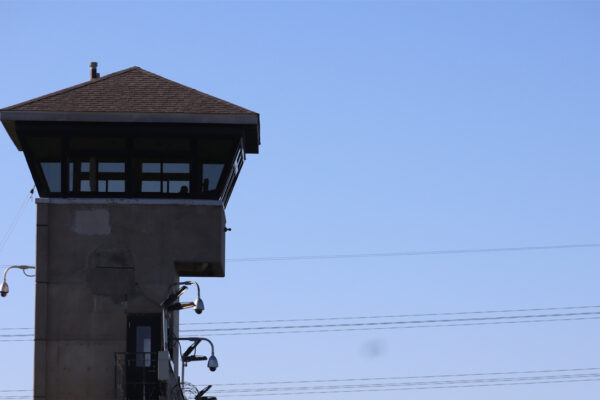
LINCOLN, Neb. – Today, Nebraska prison officials rescinded a ban that prevented certain Indigenous faith practices at the Nebraska State Penitentiary. The decision came just ahead of a scheduled court hearing in a federal civil rights lawsuit that Big Fire Law & Policy Group and the American Civil Liberties Union (ACLU) of Nebraska had filed on behalf of two men in the prison.
Joshua Lewis, who is Cherokee and of Tarasca descent, and Tremayne Scott, a member of the Rosebud Sioux Tribe, had been unable to practice certain traditions that are core to their faith due to a 60-day ban on access to a religious space within the prison yard. That religious space is the only place within the facility where prison officials allow smudging, smoking red willow bark and participating in sweat ceremonies. The ban, issued in late February, impacted about 60 men.
Lewis and Scott believe the ban was meant as collective punishment for contraband found with religious supplies. Neither was accused of placing that contraband. The men filed multiple grievances through the prison system’s administrative process, including an emergency grievance, but the ban remained in place.
On Monday, Lewis and Scott filed a lawsuit arguing that state officials were violating their rights under the U.S. Constitution as well as federal and state laws. Their lawsuit cites the federal Religious Land Use and Institutionalized Persons Act, which outlaws any “substantial burden on the religious exercise of a person residing in or confined to an institution” unless it is the least restrictive option for furthering a “compelling governmental interest.” It also argues the state is in violation of Nebraska’s First Freedom Act, which outlaws any substantial burden on religious exercise unless it is “essential to further a compelling governmental interest.” The Nebraska Legislature approved the First Freedom Act in 2024 via a bill that also expanded protections for the wearing of tribal regalia.
Wednesday afternoon, the Nebraska Attorney General’s Office relayed that prison officials would voluntarily lift the ban before its planned end date. Thursday morning, Nebraska State Penitentiary Warden Barb Lewien issued a facility-wide memo rescinding the ban and stating “NSP will resume the Native American religious land schedule in effect prior to the suspension period.”
A hearing on a request for a court order had been set for Thursday morning. Due to the state’s sudden reversal, that hearing was continued.
This development removes the need for the initial request of Lewis and Scott’s lawsuit: a court order temporarily lifting the restriction while litigation plays out. The men intend to continue litigation as they seek a permanent court order preventing future restrictions on traditional Indigenous faith practices and a judgment that the state prison system cannot lawfully restrict these practices in this manner.
Scott said:
“I would like for everyone to know that no matter where you are, incarcerated or in the community, whatever you are dealing with, when it comes to your faith, way of life, traditions and culture, stand up for what is right and fight the good fight. Don’t give up on it. Because these ways have been passed down from our ancestors from long ago for a reason. They witnessed something from God. And we need to carry this on for the generations after us, as long as the world keeps turning, so that they have these traditions too,” Scott said. “I could not have done this by myself. I’m just one voice. So long as you have good people around you, anything can happen. The outcome will be sacred.”
Danelle Smith, partner at Big Fire Law & Policy Group, said:
“The decision to lift the suspension is a welcome outcome, but it is only part of a broader effort to ensure this facility respects Native religious practices and does not impose blanket suspensions on entire groups. This situation underscores the need for policies grounded in a clear understanding of those practices, including core ceremonies barred by the suspension. For generations, Native communities have worked to preserve long-held traditions and religious practices in the face of significant challenges, a struggle reflected in this case. Big Fire is proud to represent the plaintiffs in this action as they seek to protect their rights as Native peoples under the law.”
Carter Matt, staff attorney with the ACLU of Nebraska, said:
“It should not have taken a lawsuit to reach this outcome. The government clearly overstepped by barring dozens of people from participating in traditional religious practices. Officials did not relent when our clients advocated for themselves through the grievance process,” Matt said. “Thankfully, Indigenous people at the penitentiary have been told that they can once again practice their faith in accordance with their beliefs. We are going to be vigilant and ensure that is the case. We also intend to see this lawsuit through to its end. Our work is not done until we have a court order protecting our clients’ religious freedom and preventing this from happening again.”
Related Issues
Stay Informed
Sign up to be the first to hear about how to take action.
By completing this form, I agree to receive occasional emails per the terms of the ACLU’s privacy statement.
By completing this form, I agree to receive occasional emails per the terms of the ACLU’s privacy statement.