No Creepy Cameras in Nebraska
Tell ALPRs in your community to “Get the Flock Out!”
Nebraskans can put a stop to routine mass surveillance in our communities. Sign up today for ACLU National's "Get the Flock Out" advocacy series, and you'll receive exclusive social media content and step-by-step instructions for taking action in your community.
Last updated on August 06, 2026
Nebraskans are increasingly speaking up against automatic license plate reader (ALPR) cameras in our communities.
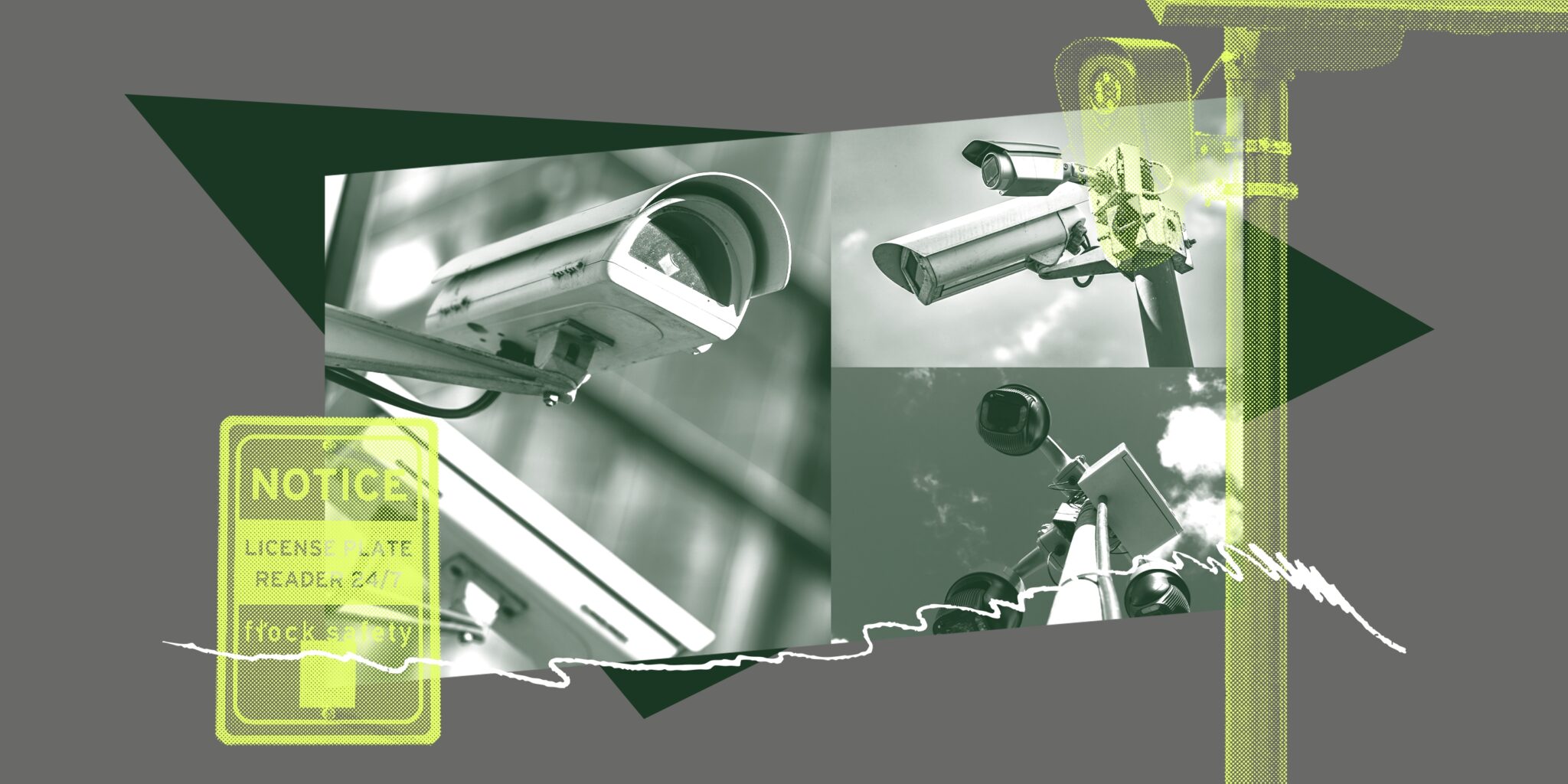
ALPR companies like Flock Safety are quietly creating a nationwide mass surveillance system. These cameras are in Nebraska, tracking, logging, and sharing our movements without a warrant.
But Nebraskans are increasingly speaking up against these creepy cameras — and your community could be the next to choose privacy over mass surveillance.
ALPRs in Nebraska
It’s not clear exactly how many ALPRs are up in Nebraska. The DeFlock crowdsourcing project estimates more than 500 cameras. Thanks to a state law that requires basic transparency around this technology – which we supported as a bill – our law enforcement agencies must report on their use, including how often officers manually entered plate numbers to search the system.
The Nebraska Crime Commission currently has reports from these law enforcement agencies, reflected in the above map: Nebraska State Patrol, Buffalo County Sheriff’s Office, Dakota County Sheriff’s Office, Dawson County Sheriff’s Office, Hall County Sheriff’s Office, Lancaster County Sheriff’s Office, Sarpy County Sheriff’s Office, Seward County Sheriff’s Office, York County Sheriff’s Office, Bellevue Police Department, Beatrice Police Department, Chadron Police Department, Fremont Police Department, Gering Police Department, Grand Island Police Department, Kearney Police Department, Lexington Police Department, Lincoln Police Department, Morrill Police Department, North Platte Police Department, Omaha Police Department, Omaha Airport Authority, Papillion Police Department, Scottsbluff Police Department, South Sioux City Police Department, UNO Public Safety, and York Police Department.
What the Flock?
Flock provides one of the most widely used ALPR systems, but it’s not the only company profiting off spying on Nebraskans. You will find Axon cameras mounted on police cruisers in Lincoln and Vigilant Mobile cameras in Buffalo County. Genetec, PlateSmart, Innova Systems, Rekor, ELSAG, Perceptics, and Jenoptik are a few of the other leading companies selling ALPRs to police, private companies, and others.
It doesn't matter which company has its cameras in your neighborhood; they all have the same problems. Any surveillance technology involves fundamental privacy concerns and introduces the possibility of misuse and abuse. Just think about how much someone could learn about your life if cameras constantly tracked where you drove. They could find out which doctors you visit, what house of faith you worship at, who you visit or drive around with — even which political meetings and protests you attend.
In Nebraska, police have used social media to surveil totally lawful activities of activists, including a private birthday party and know your rights clinic. Even with safeguards, a mass surveillance network only invites abuse.
And we've already seen how this mass surveillance tool is being leveraged to support the current administration’s mass deportation machine.
—Search logs obtained by the Flatwater Free Press through open records requests show Flock systems in the state’s two largest counties, Douglas and Lancaster, recorded more than 20 immigration-related searches, combined, from January through June. The records also show that multiple out-of-state agencies, granted access by local law enforcement, have used cameras in Nebraska for immigration enforcement...
Emily Wolf for Flatwater Free Press
ICE and the Lancaster County Sheriff’s Office refused to answer reporter questions about these searches. Douglas County Sheriff Aaron Hanson said ICE and HSI had told him the searches “weren’t purely for civil immigration violations” — but keep in mind that ICE categorizes immigrants as ‘criminal’ for violations as minor as a traffic ticket.
We can see cautionary stories in our sister states. Kansas police used Flock cameras to pursue a man who wrote a critical op-ed about the department, while a Colorado police officer wrongfully accused a woman of theft based on a Flock hit and then refused to look at evidence proving her innocence. A mother and her children were held at gunpoint because ALPR cameras wrongly flagged their car as stolen.
Communities Say No
This surveillance state has been growing at a rapid pace, but there's good news, too. Communities across the country are speaking up for their basic privacy and peace of mind. In August, the small town of Ord became the first community in Nebraska to vote for removal of its Flock cameras.
—I didn’t trust them. I don’t like them having a third-party person that runs the data. You don’t know where your data is going. Just not too keen on it, and a lot of the other council members were not either.
Ord Mayor Jeramy Sedlacek to 10/11 News
Your community could be next. We have been working for years to oppose the growing reach of these cameras, and we need your help.
Read our local advocacy toolkit and join the movement to tell Flock and other ALPR companies: "Get The Flock Out!"

Tell ALPRs in your community to “Get the Flock Out!”
Nebraskans can put a stop to routine mass surveillance in our communities. Sign up today for ACLU National's "Get the Flock Out" advocacy series, and you'll receive exclusive social media content and step-by-step instructions for taking action in your community.
The ACLU's Ongoing Work
The ACLU has been working for over a decade to increase transparency and accountability for how ALPR cameras are being used. In 2013, ACLU National released You Are Being Tracked, a report detailing how ALPR cameras were becoming a tool for mass routine location tracking and surveillance. In 2018, Nebraska passed the Automatic License Plate Reader Privacy Act, putting safeguards on the use of ALPRs by law enforcement agencies and local governments. Our affiliate helped advocate for passage of that bill and has consistently opposed the growing presence of ALPR cameras in our communities since.