Nebraska ALPR Advocacy Toolkit
Sign up to take action in your community!
Help uncover where ALPRs are being used, learn how local agencies collect and share plate data, show up at public meetings, and organize for stronger privacy protections. We’ll give you the tools to get started, connect you with other Nebraskans, and keep you informed about ways to take action.
Last updated on September 25, 2026
This toolkit will help you discover whether ALPR companies have deployed cameras in your neighborhood and provide you with the tools you need to pressure officials to get these cameras uninstalled.
Nebraska is supposed to be the good life — not the watched life. Here's what you need to know to get started in your advocacy against routine mass surveillance in your community.
ALPR companies like Flock Safety, Axon, and Motorola Solutions are quietly creating a nationwide mass surveillance system. These cameras are in Nebraska, tracking, logging, and sharing our movements without a warrant.
We've already seen how this mass surveillance tool is being used and abused. In Valley County, NE, Flatwater Free Press found that over 3,000 agencies (including the FBI and CIA) accessed the small county's data more than 450,000 times in just one month. Kansas officers used ALPRs to pursue a man who wrote a critical op-ed about the police department while a Colorado police officer wrongfully accused a woman of theft based on a Flock hit and then refused to look at evidence proving her innocence. A mother and her children were held at gunpoint because ALPR cameras wrongly flagged their car as stolen. And these cameras are doing more than capturing images of license plates, Missouri Senator Josh Hawley spoke at a congressional hearing, stating Flock admitted to him the database can be used to search by individual people.
This toolkit will help you discover whether ALPR companies have deployed cameras in your neighborhood. If they have, we'll give you the tools you need to pressure your state and local city government to cancel their existing contracts and get these cameras uninstalled. We also outline steps you can take to prohibit or strictly regulate ALPR cameras before they get a foothold in your community.
Are ALPR companies in your neighborhood?
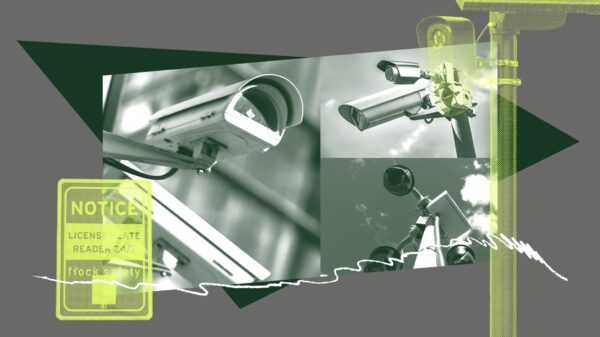
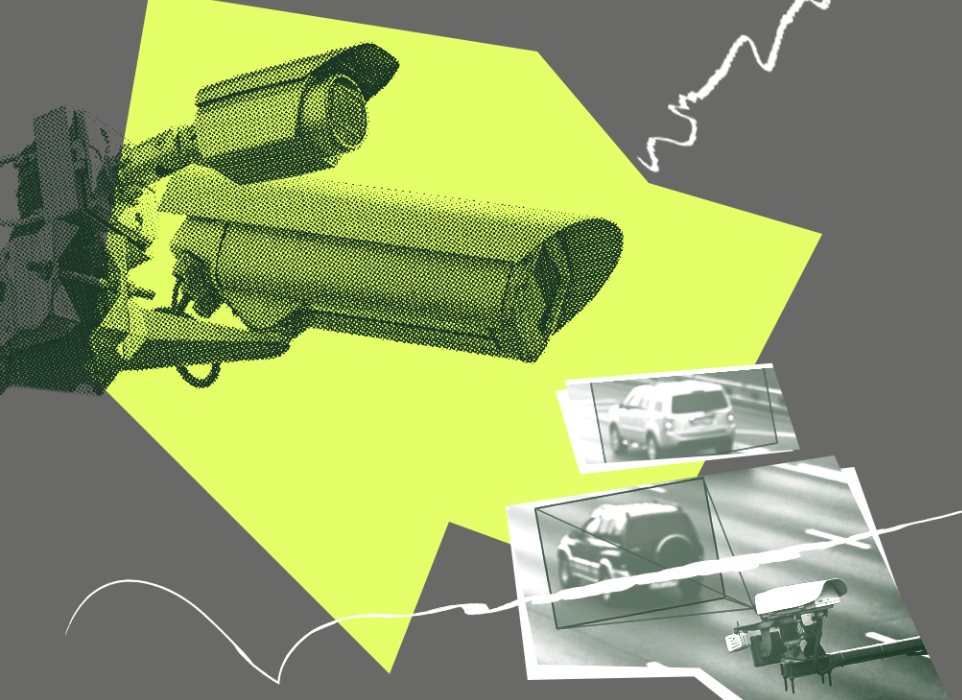
ALPR cameras aren't like your normal traffic cameras. This surveillance technology, often mounted on police cars or on objects like road signs and bridges, use small high-speed cameras that are able to photograph thousands of license plates per minute. They record and track every car that comes into view, and then an AI algorithm catalogs the date, time, location, make, model, color, license plate number, bumper stickers, and even scratches. This personal information is then uploaded into a nationwide database that any law enforcement agency with an ALPR contract can search — with few regulations or oversight on how they use what they find. Newer AI-powered systems can also search camera footage for people and objects based on descriptions, expanding what these surveillance networks can be used to identify and track.
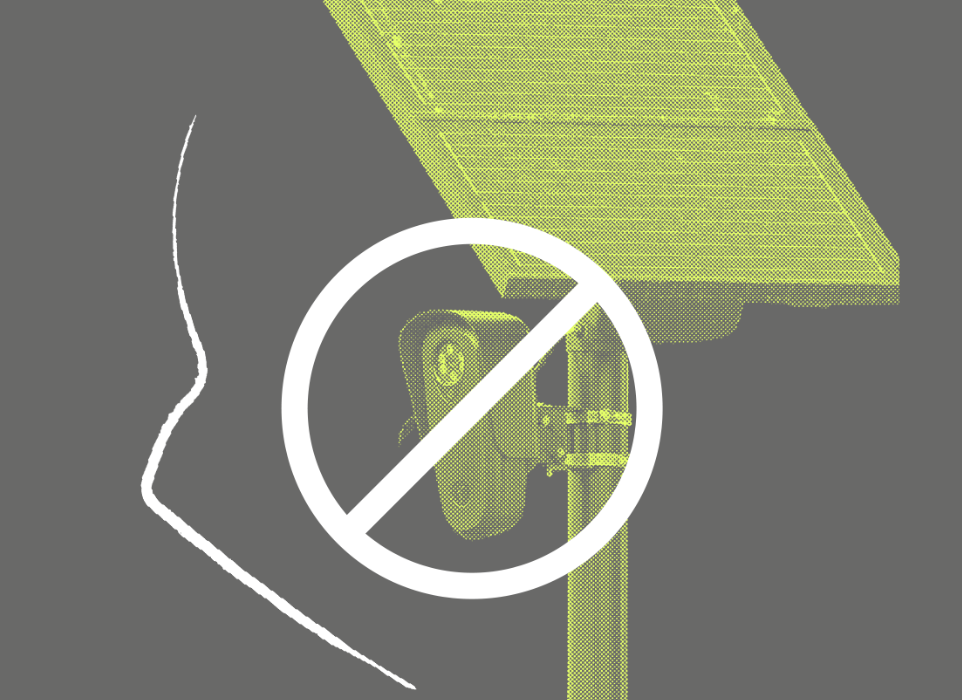
One of the biggest problems with ALPR cameras is the lack of transparency. It can be very difficult to find out exactly where these cameras are and what they are recording. Many people have no idea they’re in an area where a camera could be recording them. It’s not clear exactly how many ALPRs are up in Nebraska. The DeFlock crowdsourcing project estimates more than 500 cameras. Thanks to a state law that requires basic transparency around this technology – which we supported as a bill – our law enforcement agencies must report on their use, including how often officers manually entered plate numbers to search the system.
Here’s how you can find out where Flock and other ALPR cameras have been placed, or if your city is considering installing them:
- The Nebraska Crime Commission has reports from law enforcement agencies with these cameras, reflected on this map.
- By law, these reports are required to include (if captured): the names of each list against which captured plate data was checked, the number of confirmed matches, and the number of matches that upon further investigation did not correlate to an alert; and the number of manually-entered license plate numbers, the number of confirmed matches, and the number of matches that upon further investigation did not correlate to an alert.
- Deflock.org has a crowdsourced map showing exact locations of ALPR cameras.
- Have I Been Flocked? has a list of public audits of law enforcement agencies' use of Flock cameras. You can search this list to see if your local law enforcement has a contract with Flock.
- The Electronic Frontier Foundation's "Atlas of Surveillance" is a searchable database and map that shows which surveillance technologies — including ALPR cameras — are being used by domestic law enforcement agencies.
- Flock Safety has "transparency portals" with barebones information about their ALPR cameras in those cities. Do a web browser search for your city's name and "Flock transparency portal" to see if your city has one. You can also check this crowdsourced list of Flock transparency portals.
- Have you noticed a new camera in your community but aren’t sure if it’s actually an ALPR camera or another device? Check out this guide on how to spot a Flock camera or other ALPR system.
Find out if your community is considering installing ALPR cameras:
- Your community's website: Check city council and county board meeting agendas and minutes. Consideration of ALPR contracts could be in the “consent agenda” section. Use the keyboard shortcut CMD-F (Mac) or CTL-F (PC) to search for keywords like “automated license plate reader” or “Flock” in large documents.
- Your sheriff or local police chief can also enter into these agreements.
- Direct outreach: Email or call your city council or county board members and ask them directly if your community has an ALPR contract or is considering one.
- News coverage: Check your local news sources for stories on when an ALPR contract was adopted/when local officials considered it. It is also common to see statements from police or other local officials about ALPRs in local news coverage.
- ALPR.watch has a crowdsourced map of local government meetings where ALPR cameras will be on the agenda.
Questions to keep in mind:
- What specific problem does your community want to address? Does mass surveillance actually fix the issue, or are we just throwing new technology at a problem that it cannot solve?
- Does your community have an ALPR contract? If so, can you get a copy? When does the contract end?
- How many ALPR cameras are in use in your community? Where are they located? Are they in areas that seem to target particular groups of people (near gun stores/ranges, by churches, at schools, etc.)?
- How much is your community paying for ALPRs?
- Did the city council, county board, or sheriff approve the use of ALPRs? Did they vote on the ALPR contract? Was it part of their consent agenda? Was there public education about it? Local agencies should not acquire or deploy new surveillance systems, or expand their surveillance programs, without public discussion and debate.
- How long does your does your community retain its ALPR data and does it share it with others?
- What restrictions are there on police searching the ALPR database to track people's historical movements? Is a warrant required?
- Has your community or local law enforcement agency publicly reported on how ALPRs have been used?
Information on ALPR use is often hard to find, so don’t be discouraged if you don’t find much easily. If you’re getting stonewalled by an official or are unable to find information on your city’s website, please reach out to us at neadvocacy@aclunebraska.org so we can help you.
One of the biggest problems with ALPR cameras is the lack of transparency. It can be very difficult to find out exactly where these cameras are and what they are recording. Many people have no idea they’re in an area where a camera could be recording them. It’s not clear exactly how many ALPRs are up in Nebraska. The DeFlock crowdsourcing project estimates more than 500 cameras. Thanks to a state law that requires basic transparency around this technology – which we supported as a bill – our law enforcement agencies must report on their use, including how often officers manually entered plate numbers to search the system.
Here’s how you can find out where Flock and other ALPR cameras have been placed, or if your city is considering installing them:
- The Nebraska Crime Commission has reports from law enforcement agencies with these cameras, reflected on this map.
- By law, these reports are required to include (if captured): the names of each list against which captured plate data was checked, the number of confirmed matches, and the number of matches that upon further investigation did not correlate to an alert; and the number of manually-entered license plate numbers, the number of confirmed matches, and the number of matches that upon further investigation did not correlate to an alert.
- Deflock.org has a crowdsourced map showing exact locations of ALPR cameras.
- Have I Been Flocked? has a list of public audits of law enforcement agencies' use of Flock cameras. You can search this list to see if your local law enforcement has a contract with Flock.
- The Electronic Frontier Foundation's "Atlas of Surveillance" is a searchable database and map that shows which surveillance technologies — including ALPR cameras — are being used by domestic law enforcement agencies.
- Flock Safety has "transparency portals" with barebones information about their ALPR cameras in those cities. Do a web browser search for your city's name and "Flock transparency portal" to see if your city has one. You can also check this crowdsourced list of Flock transparency portals.
- Have you noticed a new camera in your community but aren’t sure if it’s actually an ALPR camera or another device? Check out this guide on how to spot a Flock camera or other ALPR system.
Find out if your community is considering installing ALPR cameras:
- Your community's website: Check city council and county board meeting agendas and minutes. Consideration of ALPR contracts could be in the “consent agenda” section. Use the keyboard shortcut CMD-F (Mac) or CTL-F (PC) to search for keywords like “automated license plate reader” or “Flock” in large documents.
- Your sheriff or local police chief can also enter into these agreements.
- Direct outreach: Email or call your city council or county board members and ask them directly if your community has an ALPR contract or is considering one.
- News coverage: Check your local news sources for stories on when an ALPR contract was adopted/when local officials considered it. It is also common to see statements from police or other local officials about ALPRs in local news coverage.
- ALPR.watch has a crowdsourced map of local government meetings where ALPR cameras will be on the agenda.
Questions to keep in mind:
- What specific problem does your community want to address? Does mass surveillance actually fix the issue, or are we just throwing new technology at a problem that it cannot solve?
- Does your community have an ALPR contract? If so, can you get a copy? When does the contract end?
- How many ALPR cameras are in use in your community? Where are they located? Are they in areas that seem to target particular groups of people (near gun stores/ranges, by churches, at schools, etc.)?
- How much is your community paying for ALPRs?
- Did the city council, county board, or sheriff approve the use of ALPRs? Did they vote on the ALPR contract? Was it part of their consent agenda? Was there public education about it? Local agencies should not acquire or deploy new surveillance systems, or expand their surveillance programs, without public discussion and debate.
- How long does your does your community retain its ALPR data and does it share it with others?
- What restrictions are there on police searching the ALPR database to track people's historical movements? Is a warrant required?
- Has your community or local law enforcement agency publicly reported on how ALPRs have been used?
Information on ALPR use is often hard to find, so don’t be discouraged if you don’t find much easily. If you’re getting stonewalled by an official or are unable to find information on your city’s website, please reach out to us at neadvocacy@aclunebraska.org so we can help you.
Nebraska's ALPR Privacy Act
In 2018, Nebraska became one of the early states to enact comprehensive protections for ALPR data, passing LB 93, the Automatic License Plate Reader Privacy Act, with overwhelming support and a near unanimous vote of 47–0. The law established limits on how ALPRs could be used, how long data could be retained, when it could be disclosed, and required government agencies using the technology to adopt privacy policies and report annually on their use. Nebraska recognized early that new technology shouldn't come at the expense of our privacy. Now, as ALPR technology and surveillance networks have rapidly expanded, we can lead again by strengthening those protections for the realities of today.
NE Revised State Statute 60-3201 to 60-3209 (the Automatic License Plate Reader Privacy Act) specifies:
- ALPRs can be used by a law enforcement agency or a governmental entity to identify:
- Outstanding parking or traffic violations;
- An unregistered or uninsured vehicle;
- A vehicle in violation of the vehicle equipment requirements set forth under the Nebraska Rules of the Road;
- A vehicle in violation of any other vehicle registration requirement;
- A vehicle registered to an individual for whom there is an outstanding warrant;
- A vehicle associated with a missing person;
- A vehicle that has been reported as stolen; or
- A vehicle that is relevant and material to an ongoing criminal investigation;
- By a parking enforcement entity for regulating the use of a parking facility;
- For the purpose of controlling access to a secured area;
- For the purpose of electronic toll collection; or
- To assist weighing stations in performing their duties
- Limits data retention to 180 days (about 6 months!), unless the data is evidence or subject of a warrant, subpoena, or court order.
- Requires any manual ALPR license plate search to be relevant and material to an ongoing criminal or missing persons investigation. Each search must document the reason for the search and be purged at the end of each shift, unless the investigation remains ongoing.
- Requires any governmental entity using ALPR systems to adopt a policy governing the use of the system and post it to their website, adopt a privacy policy to ensure that captured plate data is not shared in violation of the Act and post it to their website, and report annually to the NE Commission on Law Enforcement and Criminal Justice on its ALPR practices and usage, to be posted to the Commission’s website.
- Captured plate data cannot be used as evidence in court if it was obtained in violation of this Act.
It also provided an option for those with a valid, outstanding protection order for domestic violence to prohibit plate data from being disclosed to the individual against whom the order was issued.
Passage of this law was an important step forward. More needs to be done. Essential guardrails for ALPRs should include:
- Limiting data retention to hours or days, not weeks or a month or more
- Limiting data sharing by prohibiting sharing with or providing access to any other government entity unless they have a warrant for a felony crime that is recognized under local/state law
- Limiting usage to felony investigations, missing persons cases, identifying unregistered/uninsured vehicles, and certain limited non-enforcement scenarios, like electronic toll collection
- Requiring annual usage reporting and placing limits on the availability of ALPR data via open records requests so it cannot be used for troublesome purposes like stalking or embarrassing a person for entertainment value.
NE Revised State Statute 60-3201 to 60-3209 (the Automatic License Plate Reader Privacy Act) specifies:
- ALPRs can be used by a law enforcement agency or a governmental entity to identify:
- Outstanding parking or traffic violations;
- An unregistered or uninsured vehicle;
- A vehicle in violation of the vehicle equipment requirements set forth under the Nebraska Rules of the Road;
- A vehicle in violation of any other vehicle registration requirement;
- A vehicle registered to an individual for whom there is an outstanding warrant;
- A vehicle associated with a missing person;
- A vehicle that has been reported as stolen; or
- A vehicle that is relevant and material to an ongoing criminal investigation;
- By a parking enforcement entity for regulating the use of a parking facility;
- For the purpose of controlling access to a secured area;
- For the purpose of electronic toll collection; or
- To assist weighing stations in performing their duties
- Limits data retention to 180 days (about 6 months!), unless the data is evidence or subject of a warrant, subpoena, or court order.
- Requires any manual ALPR license plate search to be relevant and material to an ongoing criminal or missing persons investigation. Each search must document the reason for the search and be purged at the end of each shift, unless the investigation remains ongoing.
- Requires any governmental entity using ALPR systems to adopt a policy governing the use of the system and post it to their website, adopt a privacy policy to ensure that captured plate data is not shared in violation of the Act and post it to their website, and report annually to the NE Commission on Law Enforcement and Criminal Justice on its ALPR practices and usage, to be posted to the Commission’s website.
- Captured plate data cannot be used as evidence in court if it was obtained in violation of this Act.
It also provided an option for those with a valid, outstanding protection order for domestic violence to prohibit plate data from being disclosed to the individual against whom the order was issued.
Passage of this law was an important step forward. More needs to be done. Essential guardrails for ALPRs should include:
- Limiting data retention to hours or days, not weeks or a month or more
- Limiting data sharing by prohibiting sharing with or providing access to any other government entity unless they have a warrant for a felony crime that is recognized under local/state law
- Limiting usage to felony investigations, missing persons cases, identifying unregistered/uninsured vehicles, and certain limited non-enforcement scenarios, like electronic toll collection
- Requiring annual usage reporting and placing limits on the availability of ALPR data via open records requests so it cannot be used for troublesome purposes like stalking or embarrassing a person for entertainment value.
Communities Say No
Any surveillance technology involves fundamental privacy concerns and introduces the possibility of misuse and abuse. Just think about how much someone could learn about your life if cameras constantly tracked where you drove. They could find out which doctors you visit, what house of faith you worship at, how often you visit a gun store, who you visit or drive around with — even which political meetings and protests you attend.
Nebraskans are increasingly speaking up against these creepy cameras — and your community could be the next to choose privacy over mass surveillance. In August, the small town of Ord became the first community in Nebraska to vote for removal of its Flock cameras. Furnas County ended an ALPR trial early, and Alliance Police withdrew a budget request for an ALPR camera.
We have been working for years to oppose the growing reach of these cameras, and we need your help. Don’t let decisions about who gets watched, what gets collected, and how long our movements are tracked happen behind closed doors. Ask questions. Demand transparency. Organize your community. And make our elected officials answer for the surveillance happening in our backyard.
Build a local movement:
As more community officials consider contracts for creepy cameras, communities are organizing against mass surveillance – and winning. Even small neighborhood groups have convinced their city council members to cancel their contracts with companies like Flock, Axon, and Motorola, deactivating and then removing the ALPR cameras.
With momentum only growing nationwide, you can join local organizers or start a movement opposing ALPRs in your community. Your whereabouts are none of Flock's, or the government's, business. Here are a few suggestions on how to build a movement against ALPRs in your neighborhood:
- Lead the way by asking your friends, family, and neighbors whether they have heard about Flock or ALPR cameras. Inform them about the dangers of your local government agreeing to ALPR contracts and installing this surveillance tech. Encourage them to join you and local groups to advocate against mass surveillance. You can host a coffee meet up, house party, or coordinate with ACLU-NE to bring an ALPR advocacy training to your area to bring folks together. Contact neadvocacy@aclunebraska.org to inquire about a training in your area.
- Check out any news coverage on ALPRs in your town to see if there are other like-minded people or organizations already working on this you can join forces with. You may find allies in groups that are more likely to be targeted by malicious ALPR use, such as victims of domestic violence, immigrant rights' groups, people protesting, and groups that oppose government overreach. Include multiple perspectives. This issue impacts every single one of us.
- Raise awareness of the issue by writing letters to the editor and op-eds. You can also use social media to highlight the issues -- be sure to tag your elected officials!
- Find other organizers online through crowdsourced lists like deflock.org/groups that connect individuals with others fighting against ALPR cameras in their community.
- Reach out to us at neadvocacy@aclunebraska.org and we can connect you with other folks in your area who are ready to stand with you in opposing the growing surveillance state.
Once your coalition is ready and you’re equipped with information about ALPRs in your town, you’re ready! Timing is important. The best time to speak out against ALPRs is before a contract is signed, and the second-best time is a few months before a contract is about to end. Flock contracts tend to auto-renew every two years, but check your town’s particular contract language. Publicizing your call to end your town’s ALPR contract (or not sign an ALPR contract) is critically important to draw attention to the issue and put pressure on your city’s decision-makers. Some strategies for doing this include:
Meet with your city council and other key officials.
Talk directly with your city council or county board members. Meet them for coffee or invite them to a coalition meeting. We recommend doing some research about your city council members to find out what and who influences them.
Other key city officials to research and potentially meet with include:
- Mayor
- County sheriff
- City manager
- Police chief
- County commissioner
Many elected officials neither understand nor endorse this warrantless nationwide, mass surveillance-driven approach to ALPR use, but they adopt the cameras simply because other cities in their area are doing so. You are doing a public service by providing them with accurate information.
Attend and testify at city council meetings.
This is most impactful when you can gather a group of people to testify. Most cities include a public comment period during their city council meetings, and each person will get a few minutes to speak. This is your time to ask you elected officials’ questions and demand action. Check your city’s website to see when your city council meets and find the process for public comment (whether you have to sign up in advance, etc.). You can use this resource to help craft what you want to say.
Talk with law enforcement.
Law enforcement should set the rules for surveillance in their communities, not private technology companies. Just as people often agree to terms and conditions without reading the fine print, law enforcement agencies may not fully understand everything their ALPR contracts allow. Ask your local department to provide a copy of the contract and explain what's in it. Getting clear answers can expose gaps in oversight and create opportunities to push for stronger protections.
That might include using another vendor that does not tie its cameras into a mass-surveillance system. In other cases, you may be able to get law enforcement to add enforceable contract provisions limiting Flock or Axon's mass surveillance and data sharing capabilities. When discussing protections, the three most important areas for regulation and negotiation are how long the data is retained, who the data is shared with, and how that data is used by law enforcement.
Here are some talking points for conversations with law enforcement:
- Law enforcement doesn't have to choose between effective policing and privacy. Police agencies themselves have raised concerns about ALPR systems, particularly who can access the data, how it can be misused, whether the information is accurate, and how long it should be kept.
- Law enforcement is committed to public safety, but the for-profit, private companies that control ALPR data are only accountable to their bottom line. Local law enforcement should retain control of the data it collects, have oversight over who can access it, and limits on what they can use it for.
- If another agency wants to search your community’s data, shouldn’t they have to come to you and explain why? Law enforcement agencies should not automatically open their local data to outside agencies with no connection to a local investigation.
- Why keep information on people who were never suspected of a crime? Data that isn’t connected to an investigation should be deleted quickly, not stored for months or years just because technology makes it possible.
- Don’t let a vendor decide your department’s policy. If you want limits on retention, sharing, searches, or outside access, put those limits in your contract and department policy so they are enforceable, not just promised by a company.
- If this technology is really about solving crime, it should be easy to draw a line between legitimate investigations and mass surveillance. Ask law enforcement to support clear limits that keep ALPRs focused on crime-solving and prevent them from becoming a system for tracking where ordinary people go.
Nebraskans are increasingly speaking up against these creepy cameras — and your community could be the next to choose privacy over mass surveillance. In August, the small town of Ord became the first community in Nebraska to vote for removal of its Flock cameras. Furnas County ended an ALPR trial early, and Alliance Police withdrew a budget request for an ALPR camera.
We have been working for years to oppose the growing reach of these cameras, and we need your help. Don’t let decisions about who gets watched, what gets collected, and how long our movements are tracked happen behind closed doors. Ask questions. Demand transparency. Organize your community. And make our elected officials answer for the surveillance happening in our backyard.
Build a local movement:
As more community officials consider contracts for creepy cameras, communities are organizing against mass surveillance – and winning. Even small neighborhood groups have convinced their city council members to cancel their contracts with companies like Flock, Axon, and Motorola, deactivating and then removing the ALPR cameras.
With momentum only growing nationwide, you can join local organizers or start a movement opposing ALPRs in your community. Your whereabouts are none of Flock's, or the government's, business. Here are a few suggestions on how to build a movement against ALPRs in your neighborhood:
- Lead the way by asking your friends, family, and neighbors whether they have heard about Flock or ALPR cameras. Inform them about the dangers of your local government agreeing to ALPR contracts and installing this surveillance tech. Encourage them to join you and local groups to advocate against mass surveillance. You can host a coffee meet up, house party, or coordinate with ACLU-NE to bring an ALPR advocacy training to your area to bring folks together. Contact neadvocacy@aclunebraska.org to inquire about a training in your area.
- Check out any news coverage on ALPRs in your town to see if there are other like-minded people or organizations already working on this you can join forces with. You may find allies in groups that are more likely to be targeted by malicious ALPR use, such as victims of domestic violence, immigrant rights' groups, people protesting, and groups that oppose government overreach. Include multiple perspectives. This issue impacts every single one of us.
- Raise awareness of the issue by writing letters to the editor and op-eds. You can also use social media to highlight the issues -- be sure to tag your elected officials!
- Find other organizers online through crowdsourced lists like deflock.org/groups that connect individuals with others fighting against ALPR cameras in their community.
- Reach out to us at neadvocacy@aclunebraska.org and we can connect you with other folks in your area who are ready to stand with you in opposing the growing surveillance state.
Once your coalition is ready and you’re equipped with information about ALPRs in your town, you’re ready! Timing is important. The best time to speak out against ALPRs is before a contract is signed, and the second-best time is a few months before a contract is about to end. Flock contracts tend to auto-renew every two years, but check your town’s particular contract language. Publicizing your call to end your town’s ALPR contract (or not sign an ALPR contract) is critically important to draw attention to the issue and put pressure on your city’s decision-makers. Some strategies for doing this include:
Meet with your city council and other key officials.
Talk directly with your city council or county board members. Meet them for coffee or invite them to a coalition meeting. We recommend doing some research about your city council members to find out what and who influences them.
Other key city officials to research and potentially meet with include:
- Mayor
- County sheriff
- City manager
- Police chief
- County commissioner
Many elected officials neither understand nor endorse this warrantless nationwide, mass surveillance-driven approach to ALPR use, but they adopt the cameras simply because other cities in their area are doing so. You are doing a public service by providing them with accurate information.
Attend and testify at city council meetings.
This is most impactful when you can gather a group of people to testify. Most cities include a public comment period during their city council meetings, and each person will get a few minutes to speak. This is your time to ask you elected officials’ questions and demand action. Check your city’s website to see when your city council meets and find the process for public comment (whether you have to sign up in advance, etc.). You can use this resource to help craft what you want to say.
Talk with law enforcement.
Law enforcement should set the rules for surveillance in their communities, not private technology companies. Just as people often agree to terms and conditions without reading the fine print, law enforcement agencies may not fully understand everything their ALPR contracts allow. Ask your local department to provide a copy of the contract and explain what's in it. Getting clear answers can expose gaps in oversight and create opportunities to push for stronger protections.
That might include using another vendor that does not tie its cameras into a mass-surveillance system. In other cases, you may be able to get law enforcement to add enforceable contract provisions limiting Flock or Axon's mass surveillance and data sharing capabilities. When discussing protections, the three most important areas for regulation and negotiation are how long the data is retained, who the data is shared with, and how that data is used by law enforcement.
Here are some talking points for conversations with law enforcement:
- Law enforcement doesn't have to choose between effective policing and privacy. Police agencies themselves have raised concerns about ALPR systems, particularly who can access the data, how it can be misused, whether the information is accurate, and how long it should be kept.
- Law enforcement is committed to public safety, but the for-profit, private companies that control ALPR data are only accountable to their bottom line. Local law enforcement should retain control of the data it collects, have oversight over who can access it, and limits on what they can use it for.
- If another agency wants to search your community’s data, shouldn’t they have to come to you and explain why? Law enforcement agencies should not automatically open their local data to outside agencies with no connection to a local investigation.
- Why keep information on people who were never suspected of a crime? Data that isn’t connected to an investigation should be deleted quickly, not stored for months or years just because technology makes it possible.
- Don’t let a vendor decide your department’s policy. If you want limits on retention, sharing, searches, or outside access, put those limits in your contract and department policy so they are enforceable, not just promised by a company.
- If this technology is really about solving crime, it should be easy to draw a line between legitimate investigations and mass surveillance. Ask law enforcement to support clear limits that keep ALPRs focused on crime-solving and prevent them from becoming a system for tracking where ordinary people go.
Sign up to take action in your community!
Help uncover where ALPRs are being used, learn how local agencies collect and share plate data, show up at public meetings, and organize for stronger privacy protections. We’ll give you the tools to get started, connect you with other Nebraskans, and keep you informed about ways to take action.
Helpful Information and Draft Comments
Public Comment Template
Good [morning/afternoon/evening] [Councilmembers / Commissioners / Board Members],
Introduce yourself
- My name is [Your Name], and I’m a resident of [Your City/Town].
What is the issue
- I’m here today to register my deep concerns about our area’s use of Flock Safety’s [or other vendor] automatic license plate readers, and what they mean for privacy, safety, and local control in our community.
- Flock’s system doesn’t just record license plates. It uses AI to track vehicle details like bumper stickers, roof racks, or window decals, things that can reveal political views, religious beliefs, or gun ownership. Anyone with access to the system can then search for where any vehicle with those characteristics has been without a warrant or even a clear reason. That’s incredibly invasive.
- Even if we trust our own local sheriff or police today, this system gives thousands of law enforcement agencies across the country the ability to search and access our data, with almost no restrictions.
- [CITY SPECIFIC INFORMATION]
- How much money is the city spending on ALPRs?
- Was there a vote on the contract? Was the public notified?
- Does the city share where the cameras are located? Are there any located near any sensitive locations? (religious sites, doctor’s offices, gun stores, etc.)
Why you care
- This level of surveillance does not belong in our community. We deserve safety without being constantly watched or turned into a dataset for someone else's profit.
- We are paying for it. We are being watched by it. And we have almost no meaningful way to audit, challenge, or opt out of it.
- Surveillance can be turned on the most vulnerable in our community
- Who has access to the data collected by [city]’s cameras?
- The Mountain View police department in California thought they were protecting their residents’ privacy by turning off the data sharing feature. Instead, they found out Flock was allowing unauthorized out-of-state and federal agencies to access their residents’ location data.
- The question isn't whether this technology can police more effectively; it's whether our community wants to be policed this way. That decision belongs to us, your constituents, not private, third-party vendors.
Why the city council should care
Misuse/abuse of the system:
- At least 50 law enforcement officers across the country have been caught using Flock’s camera system to stalk romantic interests
- Police used ALPR cameras to monitor No Kings protests across the country
- Police in Lenexa, Kansas used Flock’s system to track a man after he wrote an op-ed in the local newspaper that criticized local law enforcement
Security risks:
- System has proven vulnerabilities- Benn Jordan, a privacy advocate, easily accessed several dozen of Flock’s cameras across the country using only an internet browser, including cameras in Cedar Rapids
System mistakes/misreads:
- Can lead to liability for the city and reduce public trust in law enforcement
- A man in California was mauled by a police dog when he was pulled over after a Flock camera misread his license plate. Another man in California was actually jailed for nearly a month due to police misusing Flock data.
- A woman in Colorado was harassed by her local police department after being accused of theft due to a Flock misread - she had to gather her own evidence to prove her innocence
Data sharing and control:
- Local use policies are not enough- we lose control of our data the minute it gets uploaded to the database
- Flock’s terms and conditions are meant to protect the company, not the agencies they work with
Companies are bad actors
- Flock has misled its customers and the public such as by saying federal agencies had no direct access to Flock’s ALPR data even though the company knew the agency had regular, indirect access to the data
- Flock knowingly overstates the effectiveness of data access and security measures, such as stating that its requirement that all searches of Flock’s ALPR database include the purpose for the search prevents inappropriate and unauthorized uses, even though Flock knew its system regularly accepts vague descriptions such as ‘investigation’
- Been hard for other cities to get their cameras taken down- they’ve covered them with trash bags or found out they’ve operated after the city gave notice of cancelation
Make your ask
I urge this body to work with [your police department/sheriff’s office] to cancel the contract with Flock, and not contract with any other ALPR vendor until there are transparent, community-led conversations about any future use of surveillance technology in [your town/county].
Tips:
- Look up the public comment rules ahead of time. Do you have to sign up ahead of time? How much time do you have to speak?
- Pick one or two local examples if you have them, or incidents of abuse by this tech that speak to you and your community.
- Practice reading it aloud.
- You don’t need to be an expert! Speaking as a community member matters.
Sample Email to State Senators
Subject line: Protect Nebraskans from ALPR Surveillance
Email Copy:
As your constituent, I urge you to strengthen our state's protections against the growing misuse of Automatic License Plate Readers (ALPRs) and the data they collect. Nebraska was ahead of the curve on this issue in 2018 when the Legislature passed the ALPR Act with overwhelming bipartisan support because lawmakers recognized that this technology could threaten Nebraskans’ privacy. But surveillance tech has changed a lot since then, and our laws need to catch up.
These creepy cameras capture more than license plates; they create records of where people have been, revealing a lot about their lives over time. What if a database showed that someone's vehicle repeatedly visited a certain supply store, a gun shop, a medical provider, a place of worship, or a political event? Nebraskans shouldn't have to worry that simply going about their lives could create a detailed record of their movements that could be accessed by any number of entities. And it's far too easy for this data to be abused and misused.
You have the power to protect us from this surveillance, and that starts with passing legislation to either ban ALPRs or create strict regulations that include the following guardrails:
- Limiting data retention to hours or days, not the lengthy 6-month window currently allowed
- Strengthen limits on sharing ALPR data with other agencies
- Limiting data sharing by prohibiting local law enforcement from providing access to any other government entity unless they have a warrant for a felony crime that is recognized under local/state law
- Limiting usage to felony investigations, missing persons cases, identifying unregistered/uninsured vehicles, and certain limited non-enforcement scenarios, like electronic toll collection
- Protects Nebraskans from misuse of sensitive location information for harassment, stalking, retaliation, or other improper purposes.
Each day these cameras remain active, they collect sensitive data that could be used to violate our rights. Please act now.
Sincerely,
[Your Name]
Facts & Talking Points
- Flatwater Free Press found at least nine Nebraska counties and cities have misused opioid settlement funds to purchase Flock cameras and other law enforcement tools. This money is supposed to be directed towards opioid recovery services to support Nebraskans with addiction. Instead, It’s being used to create a mass surveillance network in our state. Harlan County board gave $15,000 to the county Sheriff’s Office for Flock cameras. Valley County spent $27,000 on nine Flock cameras
- <1% of cars scanned by ALPRs are connected to any crime or wrongdoing.
- 1 in 10 license plates scanned by Flock license plate readers misread the state.
- Driving a car should not open us up to pervasive government surveillance. ALPRs have been used to track protesters, immigrants, op-ed writers critical of police, and even gun show attendees. This is a huge violation of our right to privacy. If the government suspects us of wrongdoing, they need to get a warrant.
- This inescapable network of surveillance gives police around the country new power to track all of our movements, putting our freedom to move freely in danger. Our leaders must protect our communities from these privacy-invasive cameras.
- The issue isn’t one snapshot. It’s that enough snapshots become a map of your life. This data reveals far more than our license plate number. They record where we were, when we were there, and over time can reveal our religious practices, medical visits, political activities, personal relationships, and daily routines.
- This is about protecting our rights. Flock’s universal coverage goal creates a dangerous chilling effect on the exercise of people’s constitutional rights. Even if a person is not violating the law, the threat of this constant, ever-present surveillance could make people afraid to lawfully exercise their rights of freedom of speech, religion, and association.
- If the data exists, someone will eventually want it. ALPR data is shared widely and can be accessed by other agencies, demanded by federal authorities, or disclosed to private actors under company policies that local residents never voted on. The safest data is data that was never collected or has already been deleted.
- This is not a partisan issue. We don’t have to hold the same political views to agree that the government shouldn’t track everyone’s movements just in case they might someday be suspected of something.
- Flock Safety provides one of the most widely used ALPR systems, but we know they aren’t the only company trying to make a buck by spying on us. Axon, Vigilant Solutions (a subsidiary of Motorola Solutions), Genetec, PlateSmart, Innova Systems, Rekor, ELSAG, Perceptics, and Jenoptik are a few of the other leading companies selling ALPRs to police, private companies, and others. It doesn’t matter which company has its creepy cameras in your neighborhood, they all have the same problems: a lack of transparency, oversight, and regulation into how they collect, store, and use our data, and how to hold public and private actors accountable if they abuse it.
- This technology is easily abused. Cite any of the countless stories. We can provide you with a long list of numerous reported examples of Flock-based privacy violations and other inappropriate Flock business practices upon request (last update Nov. 2025) - email neadvocacy@aclunebraska.org. The risks created by using Flock ALPRs have come to fruition repeatedly. They are not hypothetical. And Flock’s “fixes” for these risks, which are considerably more focused on protecting its profits than privacy, are so easy to circumvent that it is hard to imagine Flock ever believed they would actually work.
- The idea of keeping a location dossier on every single person just in case one of us turns out to be a criminal is just about the most un-American approach to privacy someone can imagine.
Reported Examples of ALPR Privacy Violations
We have a more comprehensive list of ALPR privacy violations that we can provide upon request (email neadvocacy@aclunebraska.org). Below is a highlighted list of privacy and rights violations from some of our neighboring states.
Kansas
- “A Sedgwick, Kansas, police chief used Flock Safety license plate readers to track his ex-girlfriend and her new boyfriend’s vehicles 228 times over four-plus months and used his police vehicle to follow them out of town, according to a city official and a report released this week by the agency that oversees police certifications. Lee Nygaard admitted to misusing Flock while he was being investigated for an unrelated misconduct case, a Sedgwick official said. He then resigned.”
- “Kechi [Kansas] Police Lieutenant Victor Heiar was arrested by the Wichita Police Department after it was discovered he utilized his position within the police department to unlawfully access WPD’s Flock license plate reader technology to monitor where his estranged wife was located.”
Colorado
- The Loveland [Colorado] Police Department admits it allowed the federally run Bureau of Alcohol, Tobacco, Firearms and Explosives (ATF) to access its Flock Safety account, which helps track license plates. Then, a Loveland Police Flock account began conducting searches in the national law enforcement database, listing ‘ICE’ as a reason for searches.”
- Partially redacted police search logs, obtained through a records request by the Colorado branch of the American Civil Liberties Union and viewed by NBC News, showed that law enforcement agencies accessed Denver’s Flock ALPR data in more than 1,400 immigration searches, including ones simply labeled ‘ICE,’ since 2024.”
- A Colorado woman was implicated in the theft of a package from the victim’s front porch in the nearby town by police showing up at her doorstep, claiming that AI-powered video footage from local Flock cameras 100% confirmed her guilt. She had to prover her innocence, flipping our fundamental tenant of innocent until proven guilty. It wasn’t easy, after finding her own evidence and repeated calls to the authorities about her case went unanswered, she mailed her evidence to the police chief. She never received an apology, but she did get a response that said the summons had been voided. She was innocent and she proved it. But what if she wasn’t somewhere that also had cameras to corroborate her alibi?
Across the country
- “A Florida police officer has been arrested for using password-protected police databases and cameras to stalk his former girlfriend…. ‘Officer Brown knowingly and intentionally accessed the password protected computer systems, Flock and DAVID (police database) to run license plates of vehicles (the victim) frequently drove for her own personal reasons,’ the investigator wrote in the report.”
- “A federal agency was using Richmond [Virginia]'s license plate reader system for immigration enforcement, the city's police department announced this week…. Police said Tuesday that they learned the Bureau of Alcohol, Tobacco, Firearms and Explosives (ATF) has been improperly accessing the automatic license plate reader data from its provider, Flock Safety, for months…. Police say they found out in June that ATF agents had been making immigration-related searches in the system since March. Then RPD cut them off…. ‘If ATF had formally requested access for that purpose, I would have denied it,’ Richmond Police Chief Rick Edwards said in a statement.”
- “When the Dallas Police Department, for example, performed a series of searches for ‘ICE+ERO’ on March 6, [2025,] the department wasn’t just searching its own cameras, it was searching 6,674 different individual Flock camera networks composed of 77,771 total devices.”
- “Lee Schmidt, a retired veteran, wanted to know more about the license plate cameras tracking him in Norfolk, Virginia, where he lives. So he sued with a co-plaintiff and a legal nonprofit and got an answer: 176 cameras across the city logged his location 526 times between Feb. 19 and July 2, according to a Monday court filing. That’s about four times per day. ‘It’s a crazy high number. It was shocking,’ Schmidt told NBC News. ‘The creepiness level just went straight up.’ The cameras are operated by Flock Safety.”