
Recording and Documenting Police and Federal Agents
Last updated: February 10, 2026 12:53 pm
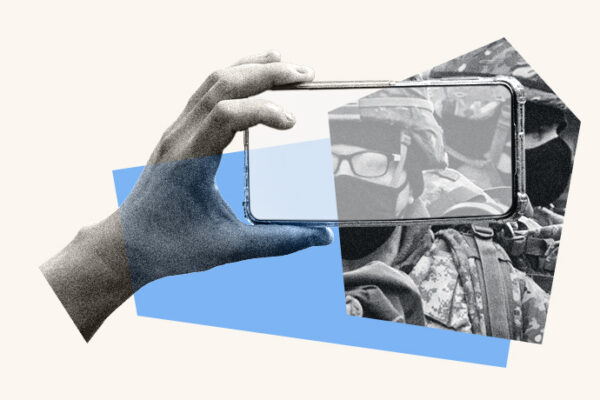
The First Amendment protects your right to take photos and videos of law enforcement officers performing their duties in public. This applies to ICE agents, police, FBI, National Guard troops, and any other government officials. If you're not under arrest, a law enforcement officer needs a warrant to confiscate your device or to view its contents without your consent. If you are arrested, an officer may take your phone but still needs a warrant to search its contents. The government may never delete your photographs or videos under any circumstances.
While the right to document and record law enforcement and federal agents is protected by the Constitution, we're all too aware that our constitutionally protected rights have been disregarded and violated in the past. Some officers retaliate by making threats, spraying chemical irritants, and arresting people recording them. This resource is intended to give you the tools to exercise your rights, but it's important to understand your risks.
Select a Scenario
Your Right to Film and Photograph Law Enforcement and Federal Agents
When you are lawfully present in a public space — such as streets, sidewalks, and parks — the First Amendment generally protects your right to photograph or film anything in plain view, including federal buildings and law enforcement. But you should not interfere with the actions of the government officials you are recording.
On private property, the owner may set rules about photography or video recording. If asked to leave by the property owner, you should move to a public space nearby.
If you’re not under arrest, a law enforcement officer needs a warrant to confiscate your device or to view its contents without your consent. If you are arrested, an officer may take your phone but still needs a warrant to search its contents. The government may never lawfully delete your photographs or videos under any circumstances.
However, they may order you to move a reasonable distance away from them to avoid obstructing their work. Even if you think a command is unlawful, it is safest to follow the order, document the interaction, and challenge it later.
You can ask for officers’ names and badge numbers, as well as who to call if there are follow-up questions. If possible, write these down, along with any other relevant observations.
Some law enforcement officials react harshly to those who record their activities, including by threatening and making arrests. While the First Amendment protects your right to record law enforcement officials engaged in their duties in public and helps you defend against unjustified retaliation or arrest, the exercise of this right carries risks.
It is important to remember that the First Amendment does not protect civil disobedience, even if your motivation is law enforcement accountability or sharing law enforcement abuses with the public. You can still be subject to punishment for breaking otherwise valid laws.
Best Practices When Recording
Make sure to capture relevant details, such as the names and badge numbers of any agents, any documents that they produce, and any weapons they might be carrying. You should also try to capture the context of your recording, including visible landmarks, street signs, and any other cameras or individuals who are documenting nearby. If you are recording a video, try to keep it as one continuous recording so others can see the full timeline and context of what occurred.
Once you have finished recording, make a copy of your photographs or recordings on other devices so they can’t be lost or deleted.
Do not edit the original videos or photos so they can be preserved as evidence if necessary.
If possible, share your documentation with the impacted individual’s loved ones or their attorney, so they can decide if, when, and how to share or release that documentation. If you don’t know the impacted individual, reach out to local organizations and networks, who may know how to reach their loved ones or legal representation.
What to Do If You Are Stopped or Arrested for Recording
Always remain calm and never physically resist a law enforcement officer.
Law enforcement cannot lawfully detain you without reasonable suspicion that you have or are about to commit a crime or are in the process of doing so.
If you are stopped, ask the officer if you are free to leave. If the answer is yes, calmly walk away.
If you are arrested, you may exercise your right to remain silent and ask for a lawyer — no matter your citizenship or immigration status.
How to Protect Your Digital Privacy
If you are planning to document and record law enforcement and federal agents with your cellphone, there are a few simple steps you can take to protect your digital privacy.
- Turn off all biometric functions to unlock your phone, including fingerprint and facial recognition technology, and activate password protection. This makes it more difficult for someone to unlock your phone without your consent and access your data.
- Ensure your phone has a strong password.
- Keep your phone in airplane mode when you don’t need to communicate with others, which can make your phone harder to track. Turn off location services unless you are actively using an app that needs access to your location.
- When you do need to communicate with others, use secure, encrypted messaging apps.
Reducing Your Risks When Recording
Even though you have the right to record and document law enforcement and federal agents in public, we’re all too aware that there can be significant daylight between what the law requires and what happens in practice. It’s important to know your rights, and also to know your risks.
Some law enforcement officials react harshly to those who record their activities, including by threatening and making arrests — or worse. Even though retaliation is a violation of your constitutional rights, and you may be protected from prosecution or punishment if and when your case goes before a judge, we understand how terrifying and threatening it can be when law enforcement reacts aggressively to being filmed. We want to help you minimize your risk and protect your safety and the safety of those around you.
- Maintain your distance from law enforcement and federal agents and do not touch them.
- Avoid sudden movements and remain calm.
- Film openly and keep your hands visible.
- If you are in a car, don’t have your phone in your hand while driving. As an alternative, you can use a hands-free dashcam or have a passenger record.
- Follow law enforcement instructions and never physically resist or obstruct agents.
If you feel comfortable doing so, you can continue to record and use your documentation to prove you complied with law enforcement instructions (for example, if law enforcement orders you to move back, say "I’m moving back” aloud as you step back, so your response can be heard in the recording).
What to Do if You Believe Your Rights Have Been Violated
When you can, write down everything you remember, including the officers' badge and patrol car numbers and the agency they work for.
Get contact information for witnesses and ask for any documentation or recordings they might have.
Take photographs of any injuries.
Once you have all of this information, you can file a written complaint with the agency's internal affairs division or civilian complaint board. You can also reach out to us.

Stay Informed
Sign up to be the first to hear about how to take action.
By completing this form, I agree to receive occasional emails per the terms of the ACLU’s privacy statement.
By completing this form, I agree to receive occasional emails per the terms of the ACLU’s privacy statement.