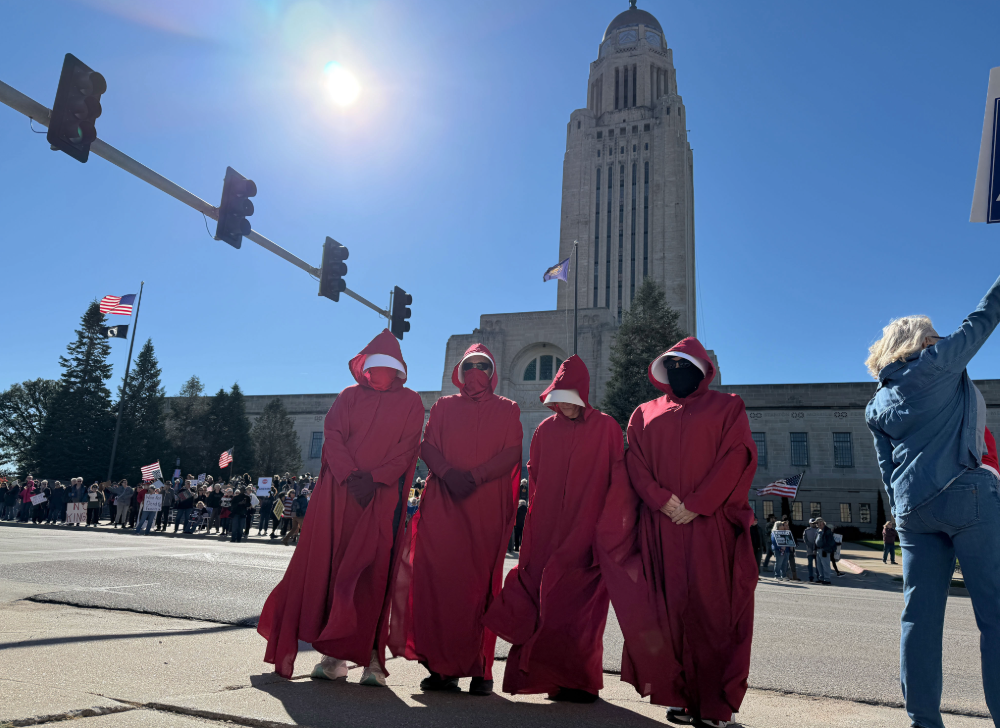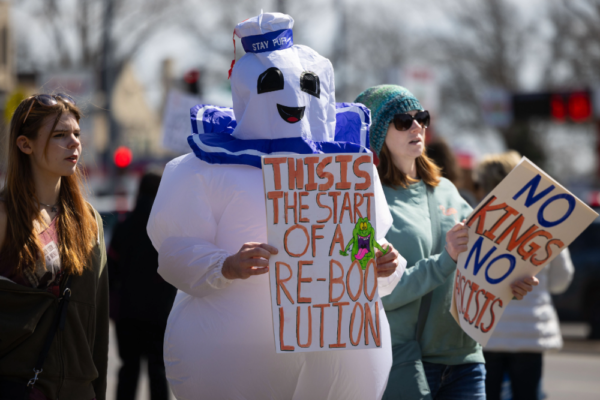
A Ghostbusters character calling for a re-boolution. Pikachu urging people over profits. Unicorns. Axalotls. The list goes on. In recent years, Halloween costumes have become more common at protests around the country and in Nebraska. That’s especially true for multi-issue protests like the No Kings rallies that thousands of Nebraskans have participated in.
Costumes have been used in political protests across cultures and decades. They can tap into humor, attract attention, and send a message that breaks through the noise. Last fall when ICE surged its presence in Portland, Oregon, and President Trump referred to it as a “war zone,” people’s costumes and dance parties undercut that message. Inflatable frogs became a playful symbol of resistance, migrating to Midwest protests not long after.
Some might wear costumes for another reason: shielding themselves from government surveillance. Nationally and in Nebraska, law enforcement agencies have tracked the activities of people based on officials’ views on protected speech. Especially in an era of AI-powered, warrantless surveillance, we understand why some Nebraskans might look for ways to protect their privacy while speaking out.
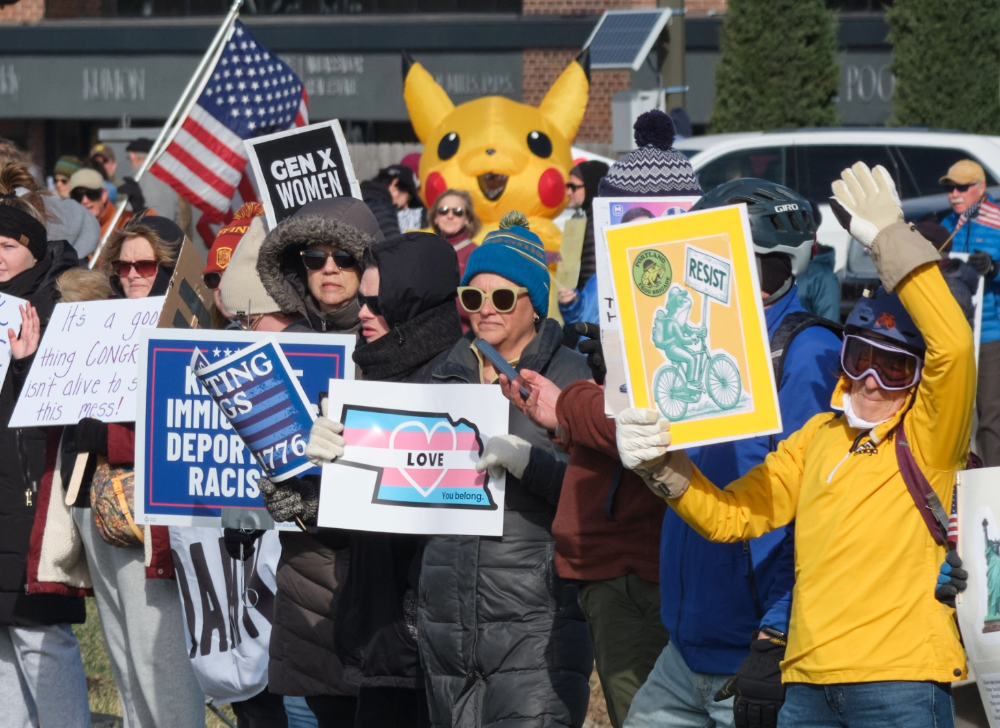
Nebraskans in costume can participate in protests the same as anyone else. Your rights remain strongest in traditional public forums, such as sidewalks, and in front of government buildings so long as you are not blocking access to the government building or interfering with other purposes the property was designed for.
If you are stopped by a law enforcement officer, you can ask if you are free to leave. If permitted, calmly walk away. If officers have a reason to believe that you committed a crime, they can ask you to identify yourself. Refusing to do so, which could involve refusing to unmask, could result in criminal charges. (Despite our best efforts, there’s no legal requirement in Nebraska for authorities to unmask if they’re also wearing face coverings — even though they’re working in the public’s name and supposed to be accountable to the public.)
If you are not free to leave, you have been placed into investigative detention, which permits officers to search you for weapons for their own safety. A pat down search, or limited entry into a pant or jacket pocket to determine the nature of an object is typical, but you do not have to consent to a full search of person or your belongings. To be able to defend your rights later, you must clearly state that you do not consent to any search. If officers search anyway, do not physically interfere with that search. If you interfere, officers could arrest you and then conduct a full search as part of the arrest. Remember, you can dispute the legality of law enforcement actions after they occur. This may be able to be done in defense of a criminal charge or by filing an affirmative lawsuit. You can also always make a formal complaint to the law enforcement agency.
It’s important to recognize that symbolic acts of civil disobedience may be outside the realm of constitutional protections and can sometimes lead to arrest and conviction.
For example, standing in a road in costume may be expressing a political opinion, but blocking traffic after you have been told to leave may lead to criminal punishment. In general, interfering with others’ use of public spaces can trigger intervention by authorities, limit your protections, or result in criminal charges. As always, know your rights and know the risk.
Halloween reminds us that humor and creativity are part of how we get through frightening and dark situations. And history shows us that costumes at protests are likely here to stay.
The bottom line is that costumes are a protected form of symbolic speech, no different than a shirt with a political message. We will always defend your right to speak out — in costume or not.